


The Psychology of a Handshake
By Alisha Sardar

A scene to remember
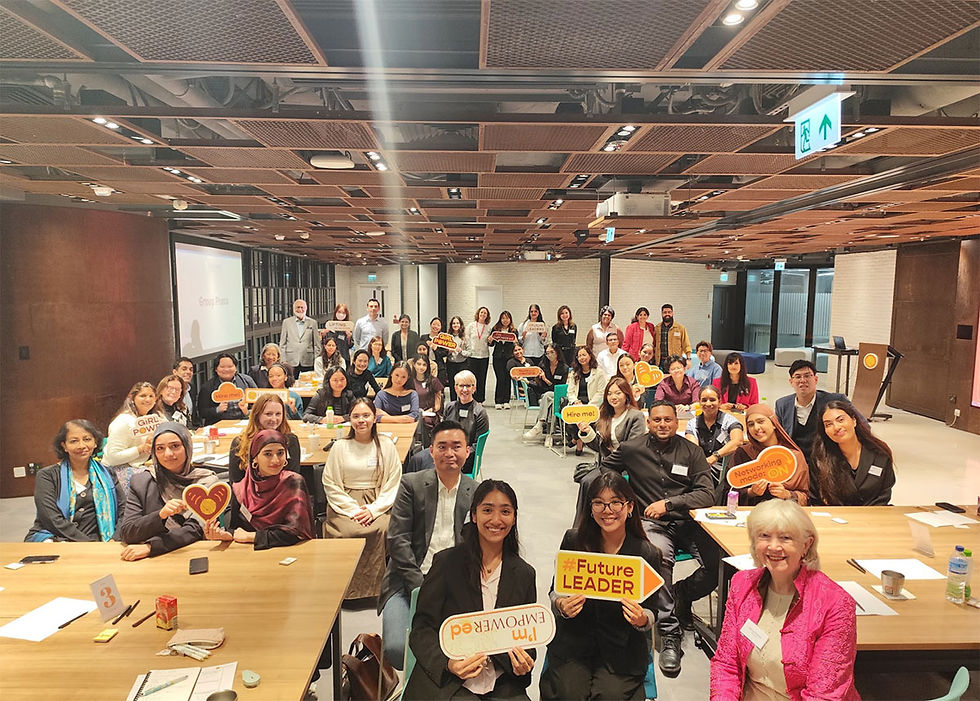
I joined the HSBC Zoom interview as a trainee psychologist rather than a banker. As a proud Empower Scholar, I joined the HSBC workshop on interview success to go beyond simply learning the correct way to respond to questions. It was to broaden my ken on unspoken conversations of the professional world, where we must establish rapport, truth, and tell stories without words. It was the most important step of advocacy as someone who hopes to make use of psychology with law to support the marginalized communities.
The Power of Zoom
There was an intriguing social script in Zoom’s buzz. It was more than simply quiet chats. It was the sound of deliberate pauses, sincere laughing that broke through anxiety, and the faint rustling of hurriedly straightened resumes. As a psychology student, I am trained to observe the body language, the micro-expressions, and the silent language of worry and confidence that manifests in every conversation. This was a live laboratory. As someone who wants to work in a professional field that requires more than just legal knowledge or therapeutic skills, it is essential to become a trustworthy and caring person in settings that require choices to be made to have an impact on people.
The Architecture of an Interview
1. The Narrative is Your Evidence
The HSBC facilitator said more than simply "be prepared." She told me that a CV is a collection of evidence rather than a list of dates. "Your CV is the 'what'," she said, "but your interview is the 'so what?’" This was a change in perspective. It involves creating a cohesive story in which each volunteer position and module serves as a data point that leads to the person seated across the table. For me, this entails making a clear connection between my psychology degree and the resiliency of the communities I want to help, presenting my expertise as a useful tool for comprehending client suffering and fostering trust rather than as abstract theory.
2. The 1:1 as a Diagnostic Dialogue
The main event, the 30-minute mock interview, was the most remarkable. My HSBC volunteer interviewer took the initiative in the rapport-building as a life case study. The criticism focused more on my delivery than my responses: "Your points about your strengths were strong, but remember to use precise wording when you say it to show more professionalism." This was an effective congruence lesson. In both therapy and legal support, your words and mannerisms must be consistent to be taken seriously. I came to understand that the interview serves as a diagnostic instrument to evaluate both character and competence.
3. Redefining "Professional" as "Purposeful"
During the regroup, a fellow cohort member shared a reflection that stuck with me: "I always thought I had to put on a professional mask, but they just wanted to see my professional mind." This dismantled a core anxiety. My goal isn't to change my identity to fit a mould but rather it is to channel my unique perceptions and passion with clarity and purpose.
The Human Side of the Framework
The human application of STAR (Situation, Task, Action, Result) was more notable than the framework itself. The HSBC volunteers were listening for sincerity in addition to evaluating skill. They wanted to know who was responsible for the answers. This generosity, the desire to devote time to identifying and nurturing potential, is at the heart of the empathy I hope to bring to my job. It served as a reminder that real human connection is the cornerstone of success, whether in a neighbourhood law clinic or a corporate skyscraper.
Gratitude and Looking Ahead
Thank you to the HSBC volunteers and The Amber Foundation. The setting you created, where a psychology student could recognize her position in a professional ecosystem, had an even greater impact than the advice you provided. You proved that the abilities to listen, establish rapport, and comprehend human drive are priceless assets worldwide. My path has been cemented by this event. The next stage is to look for positions and additional training that combine psychological concepts with legal advocacy to become a voice that not only represents the underprivileged but is also heard by the systems that must pay attention.
Reflection
Seeing your own mirror in a universe you never believed you belonged to can often cause the most significant changes in perspective, rather than learning a new theory. I was able to clearly see the mirror last Thursday in a hotel high above the city, and it was full of possibilities.
Connect with Alisha Sardar on LinkedIn


Comments