


Showing Up with Intention
Personal Branding, Presence, and Leadership
by Khadija Zahad and Sumayya Afeefa

Professional success is often associated with technical skills, qualifications, and experience. However, one of the most valuable lessons we learned from the recent EMPOWER by The Amber Foundation workshops was that success is also influenced by how we present ourselves, communicate with others, and manage challenges under pressure.
Throughout this workshop, industry professionals shared practical insights on confidence, networking, communication, personal branding, and career readiness. While each session focused on different topics, a common message emerged: being good at something is no longer enough. People need to understand you, trust you, and recognise the value you bring.
Understanding How We Show Up
One of the key discussions focused on the idea of "showing up." Initially, we assumed this simply meant being present, but the workshops highlighted that showing up involves both internal and external factors.
Internally, how we show up is influenced by our mindset, self-awareness, knowledge, and the way we respond to challenges. Externally, it is reflected through our communication, appearance, body language, and the energy we bring into a room.
A particularly memorable point was the importance of speaking with intention. Rather than simply participating in conversations, we should understand our purpose, know what we want to communicate, and ensure our actions align with our goals. Having intention behind our words and behaviours allows us to communicate more effectively and confidently.
Another concept that stood out was the idea of visibility. One speaker shared that visibility matters because opportunities often come to those who are seen, heard, and remembered. This reminded me that professional growth is not only about working hard behind the scenes but also about actively communicating our value and contributions.
The Power of Presence
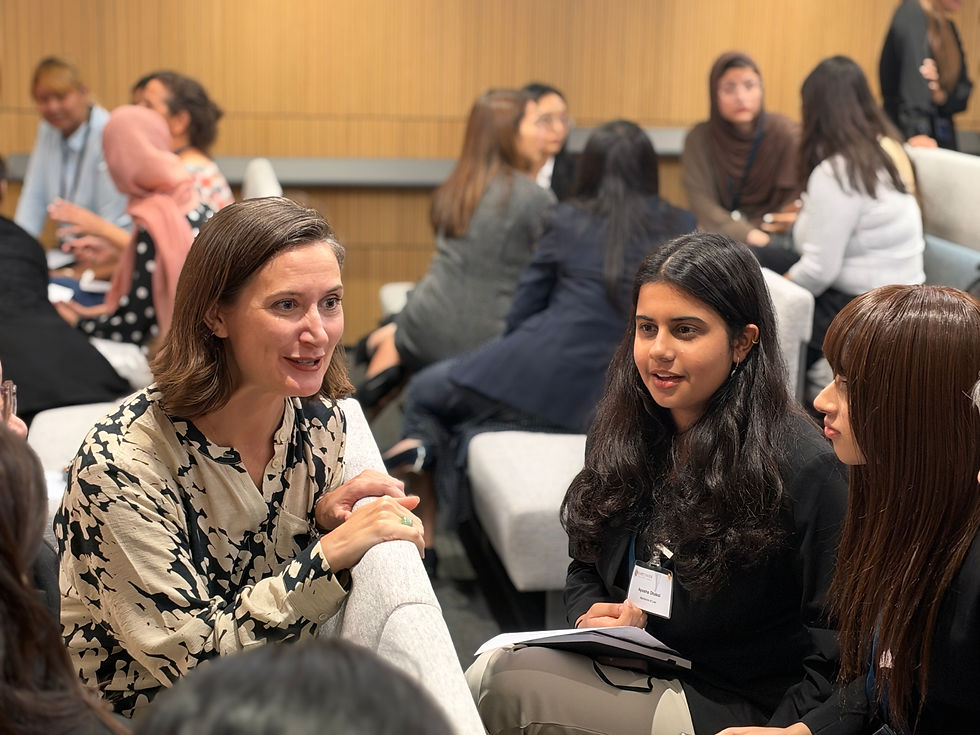
The workshop also explored the importance of executive presence and first impressions. Before we even begin speaking, people often notice how we carry ourselves, our posture, and the confidence we project.
The idea of a power posture was particularly interesting. Confidence is not always something we naturally feel, but our body language can influence how we present ourselves and how others perceive us. Maintaining strong posture, making eye contact, and entering a room with purpose can communicate confidence before words are exchanged.
Another takeaway was the importance of "reading the room and owning the room." This
does not mean dominating conversations. Instead, it involves understanding the
environment, adapting appropriately, and being fully present. Entering a room with
preparation and awareness enables us to engage more effectively with others.

Learning from an HR Perspective
A valuable part of the programme involved hearing directly from HR professionals about
recruitment and networking.
One speaker explained that before applying for a role, candidates should understand:
● The day-to-day responsibilities of the role
● The work and objectives of the team
● The organisation's business and values
Applicants were encouraged to view applications as conversations rather than checklists.From an HR perspective, successful applications are often evaluated based on eligibility, evidence, motivation, and clarity.
Another useful piece of advice was to prepare evidence-based stories that demonstrate
skills and experiences. Rather than simply stating strengths, candidates should provide
examples that show how those strengths were applied in real situations.
The networking discussion also challenged my understanding of professional
relationship-building. Effective networking is not about talking the most. Instead, it involves listening actively, asking thoughtful questions, and showing genuine curiosity about others.

Managing Nervousness and Building Confidence
One of the most practical sessions focused on managing anxiety and nervousness in
professional settings.
Many people experience nerves before presentations, interviews, and networking events. The workshop introduced several techniques that can help individuals remain calm and focused.
The first was movement, which was described as a natural antidote to nervousness. Building movement into a routine before important events can help release tension and improve concentration.
Another strategy was positive self-talk. The speakers encouraged participants to replace
negative thoughts with constructive affirmations. This shift helps move our thinking from irrational self-doubt to more rational and balanced perspectives.
We were also introduced to square breathing, a simple technique that involves:
● Inhaling for four seconds
● Holding for four seconds
● Exhaling for four seconds
● Holding again for four seconds
Repeating this cycle three to four times helps regulate breathing and reduce feelings of
anxiety.
In addition, the workshop highlighted grounding techniques, which involve focusing on the immediate environment and bringing attention back to the present moment. This can be particularly useful during stressful situations where thoughts become overwhelming.

From Proving to Positioning
Perhaps one of the most meaningful lessons from the programme was the concept of
personal branding. As highlighted during the session:
“Personal branding is the intentional process of shaping how others understand, experience, and remember your value—through clarity, consistency, and credibility.
The speakers encouraged participants to think beyond the question, "What do I do?" and instead consider, "What do I want to be known for?" This shift from constantly proving ourselves to intentionally positioning ourselves was a powerful idea. Building a personal brand is not about self-promotion but about consistently demonstrating values, strengths, and expertise over time.
Key Takeaways
Reflecting on the programme, three lessons stand out most:
1. Confidence comes from preparation and self-awareness rather than perfection.
2. Building genuine relationships is more valuable than simply expanding a network.
3. Professional success depends not only on what we know but also on how we
communicate, connect, and show up.

Appreciation and Moving Forward
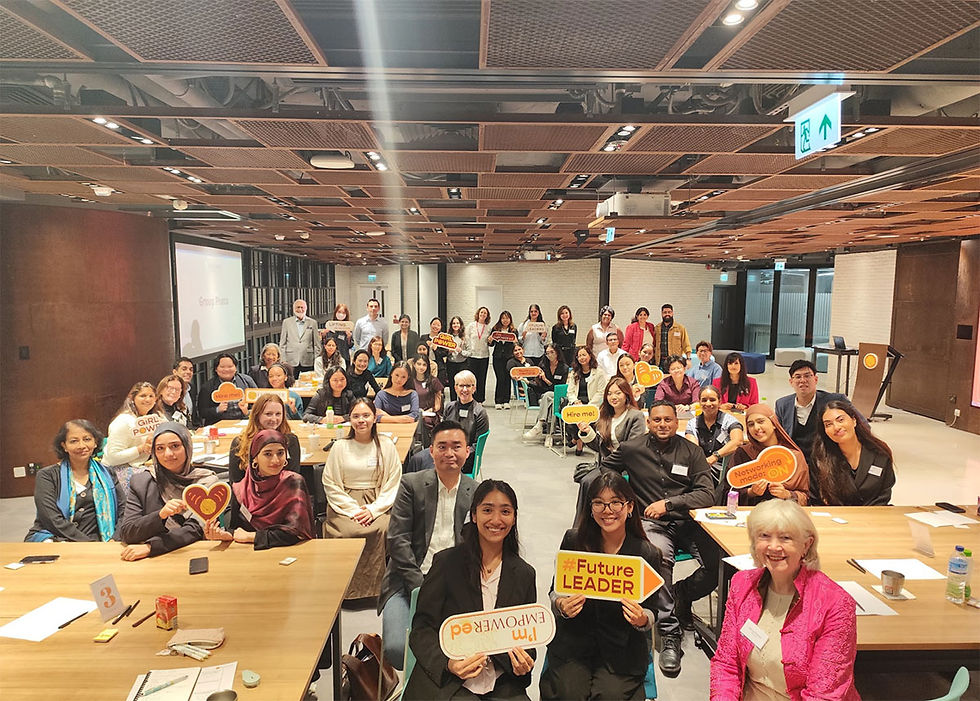
We would like to express our sincere appreciation to The Amber Foundation and Morgan Stanley for collaborating to make this workshop series possible. The sessions provided valuable insights into leadership, communication, networking, confidence, and professional growth.
Special thanks to Tracy Ho, Aarti Hemnani, and Carrie Li for sharing their experiences and practical advice on personal branding, executive presence, networking, and career
readiness. Their insights gave us actionable strategies that we can apply throughout our
professional journeys.
We would also like to thank Felicity McRobb and Ria Mehrotra for facilitating the sessions, as well as all the ExCo members and group leaders for their support and encouragement throughout the programme.
Moving forward, we hope to apply these lessons by communicating with greater intention, approaching networking with genuine curiosity, and continuously building the confidence to step outside of our comfort zones.
Growth begins with showing up, and this programme reminded us that showing up with
purpose, confidence, and authenticity can make a meaningful difference in both our personal and professional development.
Find out more about EMPOWER


Comments